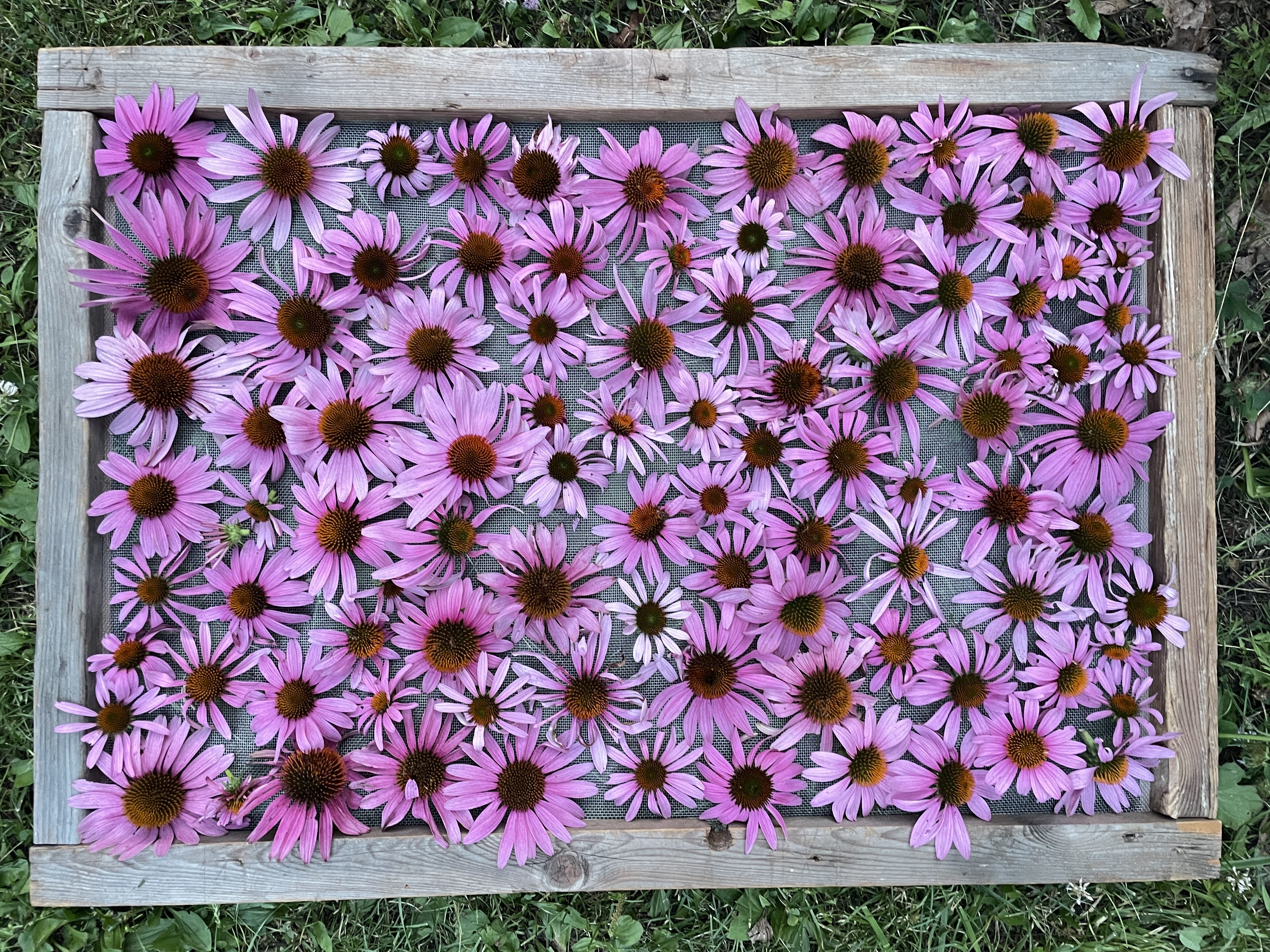
Ooooo beautiful Echinacea! It might be very important this winter, so I collected flowers for tea. I’ll dig up some roots a bit later after I collect a small amount of seeds for replanting and medicine making. I use Echinacea liniment, salve, and oil in first aid remedies. At the Elderberry School I was taught to use the flowers because they are as effective as the roots and easy to gather without killing the plant.
Traditional indigenous methods in North America included decoctions made from roots by simmering or simply chewing on roots. When I thin my plants I use an entire flowering plant to juice and preserve as a tincture and collect roots for winter tea. The seeds are incredibly powerful, so be sure to dilute the preparation before using.
Summer foraging is extremely satisfying. But the end of summer can feel overwhelming.
The cooler days mean time is running out. The leaves start changing color. Flowers start going to seed. Fruits are ripening or perhaps already over ripe.
So many plants, so little time.
Foraging demands a process of elimination.
What do I need now? What will I likely need over the winter? And what can wait until next year?
Some plants eliminate themselves. The currants and elderberries decided 2026 wasn’t a good time while other plants are abundant and pulsing with energy.
Foraging distractions abound.
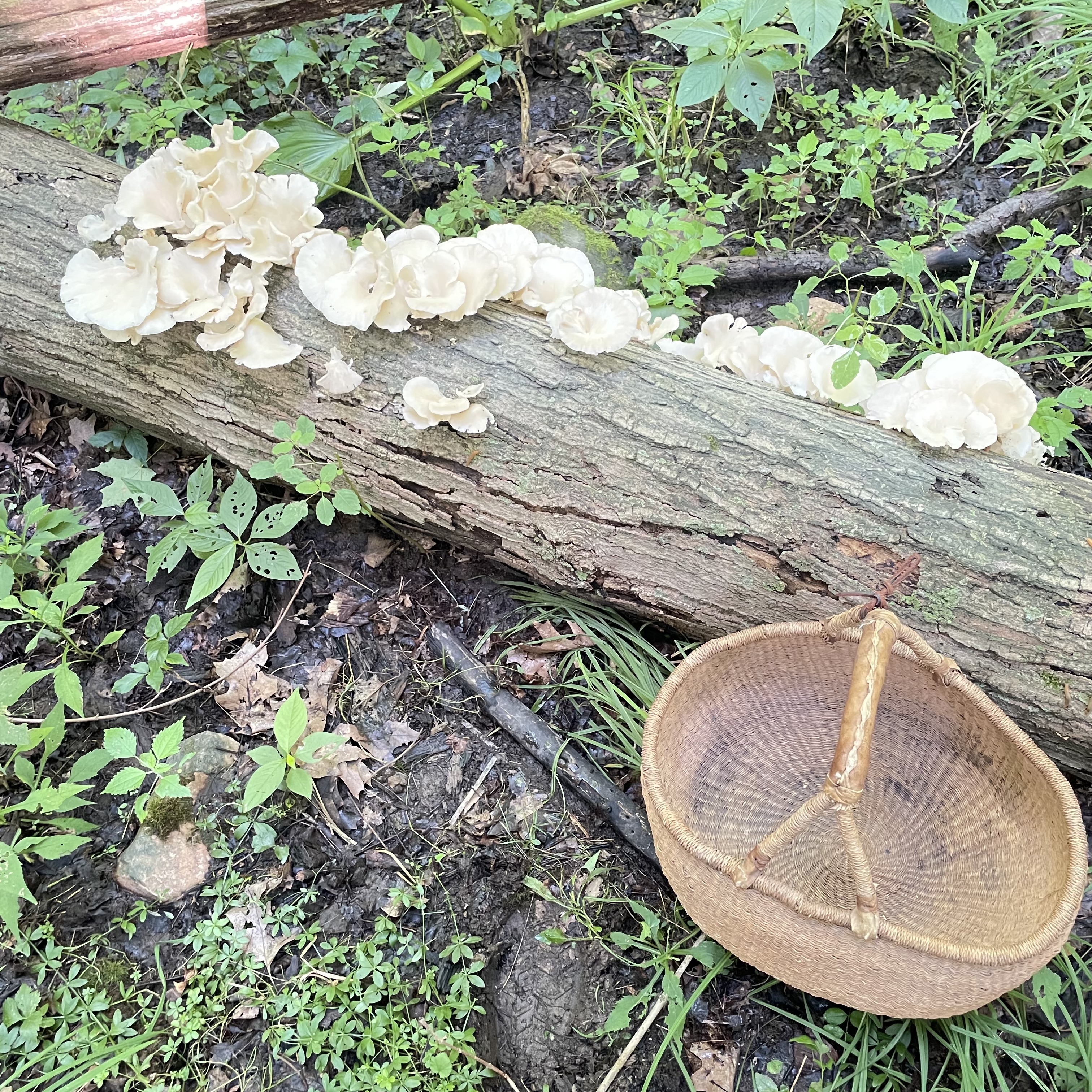
I’ll go looking for one thing and find another. In this case I was looking for fragrant bedstraw, which is down in the left-hand corner, but I nearly forgot about it when I found this flush of oyster mushrooms.
I’ve been rather obsessed with plantain of late. My latest project is called 100 Uses of Plantago. Delving into this plant took me on an unexpected journey. I joined a writing group and I’m finding more ways to preserve plantain.
Early on I learned to use plantain fresh; many herbalists teach this. But Nicholas Culpeper, among other authors, recorded uses of dried leaves and seeds. So I’m drying the leaves and seeds of round-leaf plantain.
Long-leaf plantain doesn’t dry well – I was told this in herb school a thousand years ago, but I tried it anyway and they mostly turned brown. Perhaps cutting those long veins would help but that’s just more work when there’s plenty of round-leaf (American and English) plantain at my feet.
Right now I’m throwing plantain in the blender with water for a cleansing, gut healing beverage. For the darker days of winter I’m looking forward to plantain leaf tea, plantain baths, and experiments with plantain seeds.
Here’s a sneak preview of the project. I’m making a poster listing 100 uses of Plantago that will have an online resource to help those who get the poster learn more. Each use will be detailed with references, techniques, plus a full profile on the energetics (physical properties) and herbal actions of plantain, and why it can be used so many different ways.

Use this form to reserve a copy of the poster. The cost will be $25 + shipping.


Upcoming
Workshops & Walks
September 26 – Herbal First Aid: Start Your Kit, Lakewood, Ohio
October 2-3 – Emergent Herbalism and Community in Disaster Situations, Green Roots Convergence, Chagrin Falls, Ohio
October 4 – Plant Walk, near Chagrin Falls, Ohio
Community Distillation for Herbalism and First Aid, interested? Get in touch!
For more info on classes and sign up options, visit the Workshops & Walks page.

And for those of you who have been waiting, preregistration for the Community Herbal Intensive – Getting Grounded 2027 is now open.

Get grounded in the foundations of herbalism
Leave a Reply