
The Trillium Center is an education and retreat center dedicated to regenerative forest practices and connecting to nature through herbalism, healing, and creativity.
Regenerative Forest Practices
The Trillium Center is a botanical sanctuary registered with United Plant Savers. Herbalist Leah Wolfe began planting medicinal plants in 2009 with an emphasis on at-risk native medicinals. Maple syrup production complements the project. We currently work with a small sugar bush and we are in process of seeking ways to expand the project with a eye to regenerative forestry.
A new center will be opening in 2027 in the back of the forest. The next regenerative project is to establish a trillium garden with several species of trillium and a native plants garden while expanding the maple syrup project to create a more sustainable income for the farm and education center.

The Botanical Sanctuary
Leah started a United Plant Savers botanical sanctuary in 2009 in NE Ohio where students and apprentices learn and practice foraging and medicine making. The medicine gardens preserve native medicinal plants and allow participants to connect to nature through herbalism, seed collection, and ethical foraging practices.
The center was named after the trillium because trilliums are becoming more rare with habitat loss. Part of the difficulty is that trilliums are propagated by ants; establishing new populations naturally is a much slower process than plants that are propagated by deer and other mammals. Creating new habitat and bringing in new plants will help establish new populations faster. The trillium and the ant are featured in the logo to reflect this relationship but also as a metaphor for spreading education through community projects.
Connecting to Nature
The Trillium Center brings plants to people and people to the forest fields through herbalism and foraging for wild foods. In 2013, Leah established the Trillium Center as an education center to improve community health through herbalism and homesteading. Leah offers hands-on and online experiences in herbalism, foraging, homesteading, folk arts, and disaster preparedness.

The Herbalist
Leah Wolfe is an herbalist, homesteader, and educator with a background in literary and health research, public health, and disaster response. She explores and cultivates folk art, folklore, and traditional practices of homesteading and herbalism. Leah grew up in village between the Angeles and the San Bernardino National Forests in southern California. She travels to learn ecology through herbalism, practice regional botany, and learn about regenerative farming projects.
Offerings include herbal courses, herbal, assessments, property walks to help people know the wild edible and medicinal plants on their land, foraging forays for wild food and medicine, workshops, private classes, and online education. The herbal course is called the Community Herbal Intensive and is divided into two parts called Getting Grounded (year 1) and Getting Rooted (year 2). Year 1 can be completed separately if participants are only interested in the foundations. Learn more at: trilliumcenter.org/community-herbal-intensive
Leah created The Crow’s Feet, a mutual aid herb project to support communities affected by disasters, poverty and oppression. The Crow’s Feet hosts medicine making events to create and distribute herbal preparations. Support the project by becoming a sustaining member. Medicine making events are free to attend, but members are needed to ensure that supplies are available and for postage to deliver care packages. Learn more at thecrowsfeet.org.
For herbal assessments, walks on your land, or private workshops/classes, contact Leah by sending a note.
The Builder
Charles Schiavone built a small straw bale and cob classroom called the Seed House. Leah taught in the classroom for 7 years until the groups attending outgrew the space. The Seed House is now primarily used as an art studio and can be viewed during a tour of the farm.
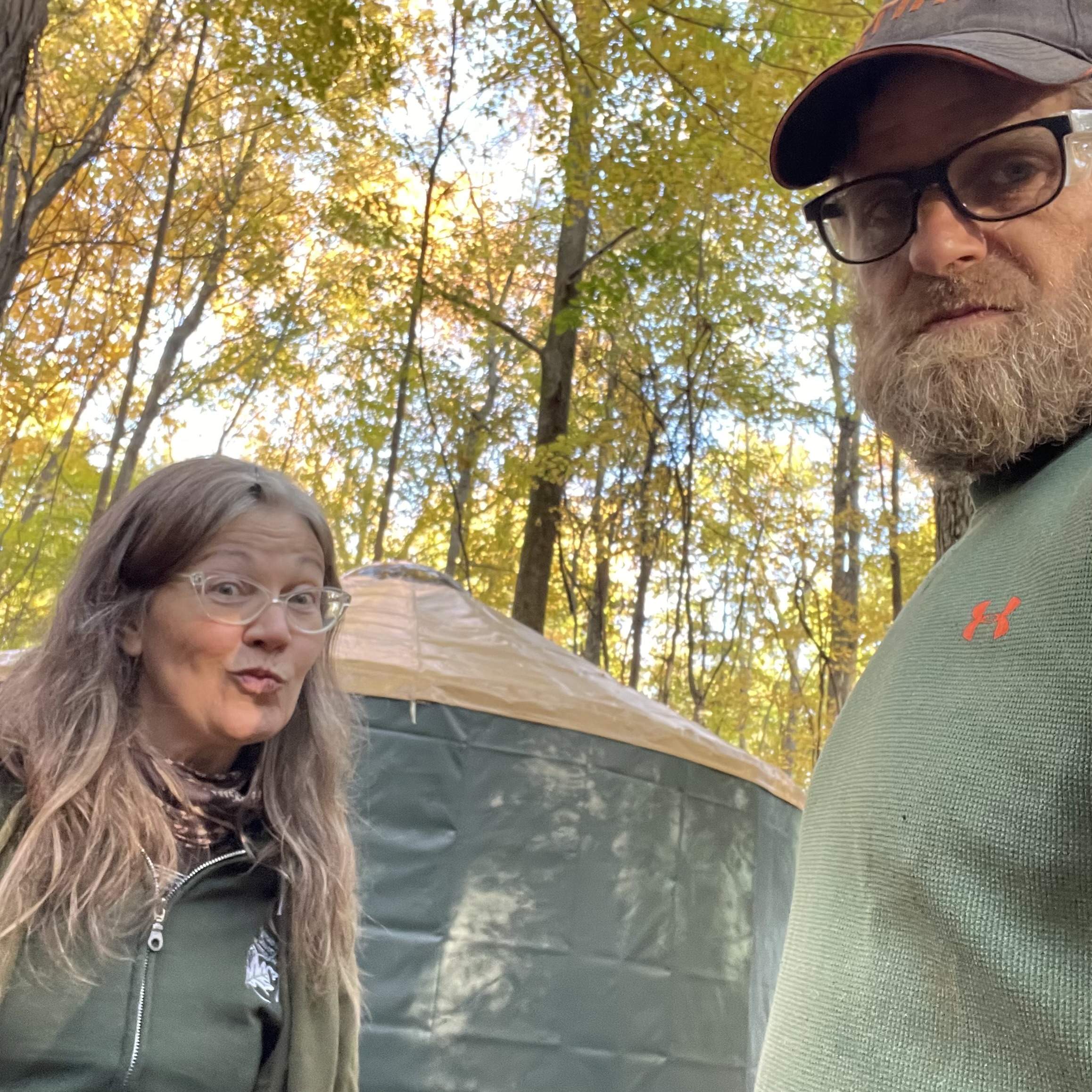
The yurt was purchased from Blue Ridge Yurts and raised with the help of our community. The floor is wood from the land and it is phenomenal with the range of colors from oak, ash, black maple, and hickory.
The next project is a mobile sauna, which will be used at the yurt during forest bathing retreats and other traditional healing practices.
Stay in Touch
Subscribe to get updates on events, classes, and projects.
Leah, your program for garden club today was one of or best ever!
Thank you, Lois U.